Blog
How To Clean Your Floor Mats The Right Way?
Your floor mats do more work than any other surface in your car. Salt, slush, coffee, gravel, dog hair, whatever came off your boots in a parking lot in February — it all lands there, and it stays there until you deal with it.
Most people fall into one of two camps: they never take the mats out at all, or they attack them with whatever cleaner is under the sink. Neither ends well. Here's the routine that actually works for TPE mats.
What you'll need?
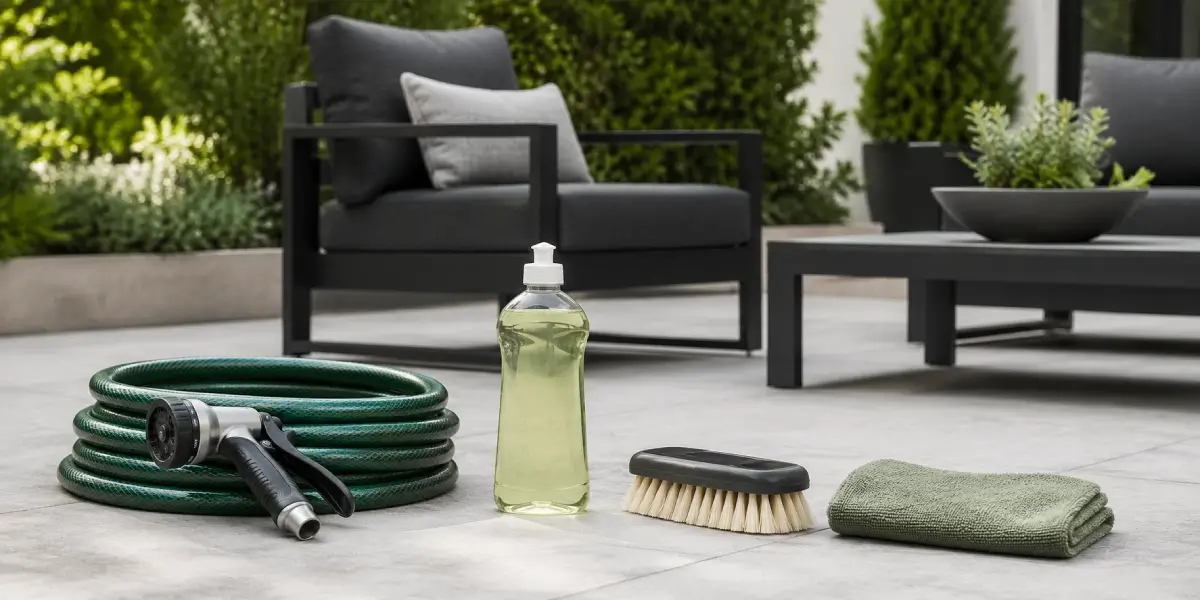
A garden hose, mild dish soap, a soft-bristle brush, and a microfiber towel. That's it. No specialty products required.
The five-minute wash
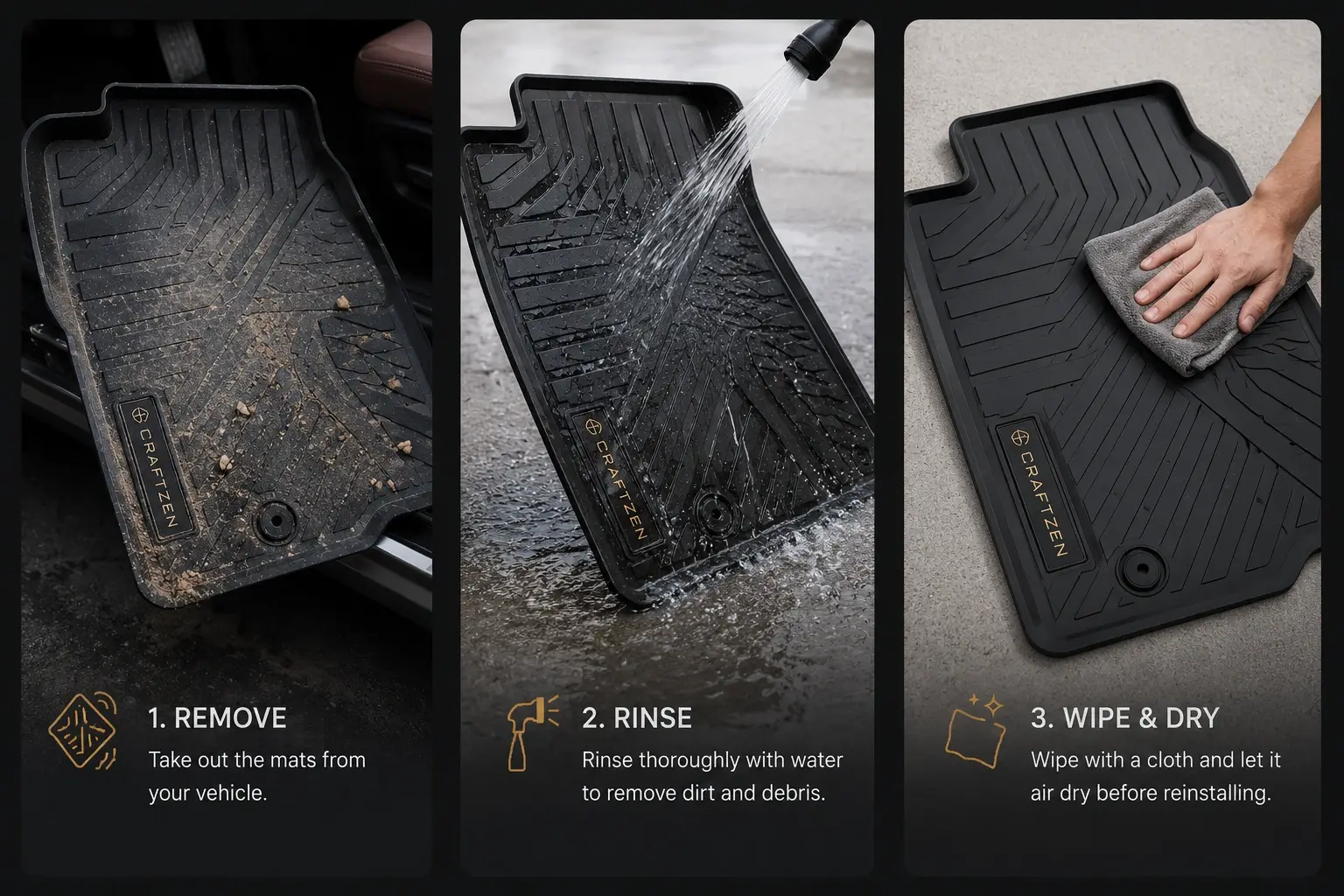
1. Take them out — all of them.
Cleaning a mat while it's still in the footwell just pushes dirt into the carpet underneath. Pull all four, including the ones under the front seats that never see daylight.
2. Knock the dry stuff loose first.
Give each mat a few firm shakes and slap them against a hard surface. Sand and grit are what wear down the surface texture over time, so you want them gone before any water is involved.
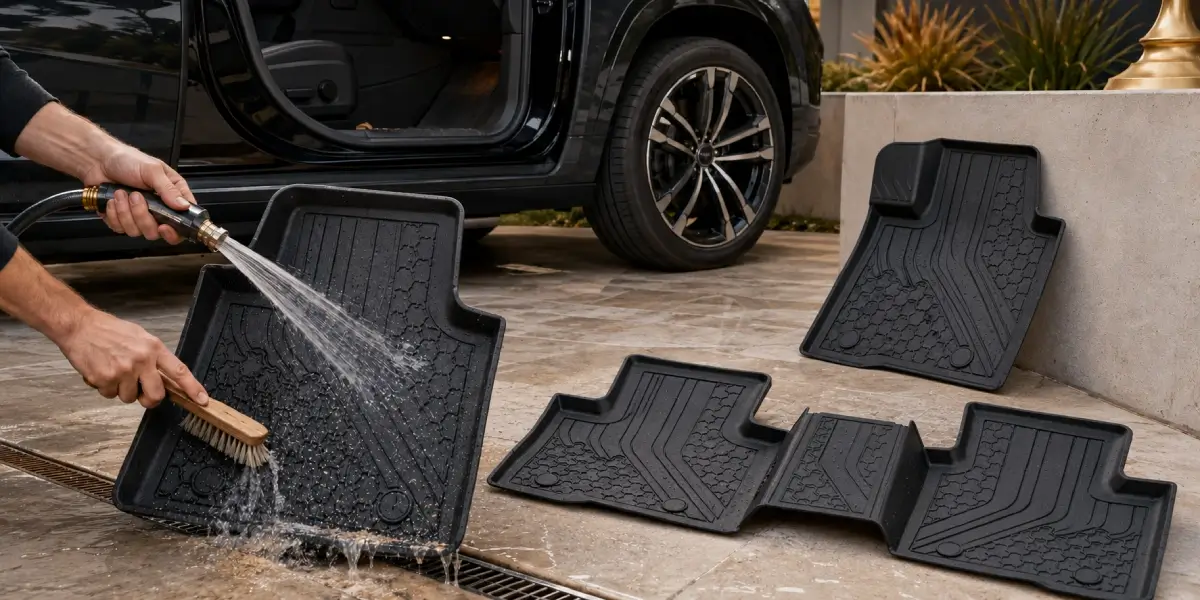
3. Hose them down, then work the channels.
CraftZen mats are built with raised ridges and deep channels precisely so liquid and debris collect there instead of on your carpet — which also means that's where the grime concentrates. Warm water, a drop of dish soap, and a soft brush along the length of the channels. Don't forget the raised lip edges.
4. Rinse both sides.
Flip the mat and rinse the underside too. The anti-slip pattern on the back is what keeps the mat from sliding toward your pedals, and it can't grip through a layer of caked dirt.

Winter salt needs one extra step
Road salt leaves a chalky white film that plain soap tends to smear around rather than lift. Mix equal parts white vinegar and warm water, spray it on, let it sit for two or three minutes, then rinse thoroughly. The acid breaks down the salt residue. Rinse well afterward so no vinegar is left sitting on the surface.
If you're cleaning outdoors in a Canadian winter, TPE handles it — the material holds its shape from -50°C to +80°C, so cold water and freezing air won't make it crack or stiffen up.
Skip these
- Silicone sprays and tire-shine dressings.
They leave a slick film. On a driver's mat, that's a genuine safety problem — your foot can slip off the pedal.
- Solvents, gasoline, brake cleaner, bleach, or acetone.
All unnecessary, and all capable of damaging the surface.
- Washing machines and dishwashers.
The tumbling and heat can distort the fit that the mat was moulded for.
- Heat guns or hair dryers to speed up drying.
Air-drying takes longer and is the correct answer.
Dry them fully before they go back in
This is the step people skip. A damp mat dropped back onto damp carpet traps moisture underneath and grows exactly what you'd expect. Hang the mats or lean them upright until both sides are completely dry, then vacuum the footwell before reinstalling. Snap any retention clips back into place so the mat sits where it was designed to sit.
How often?
Every two weeks through winter, monthly the rest of the year. A quick shake-out between washes takes thirty seconds and does most of the work.