Car Mats

4 Reasons to Use All-Season Mats

Plenty of drivers still run the two-set system: carpet mats most of the year, rubber mats when the snow starts. It's a habit worth questioning, because the swap solves a smaller problem than most people think it does.

Here's the case for one set that stays in the car year-round.

1. Mess isn't seasonal

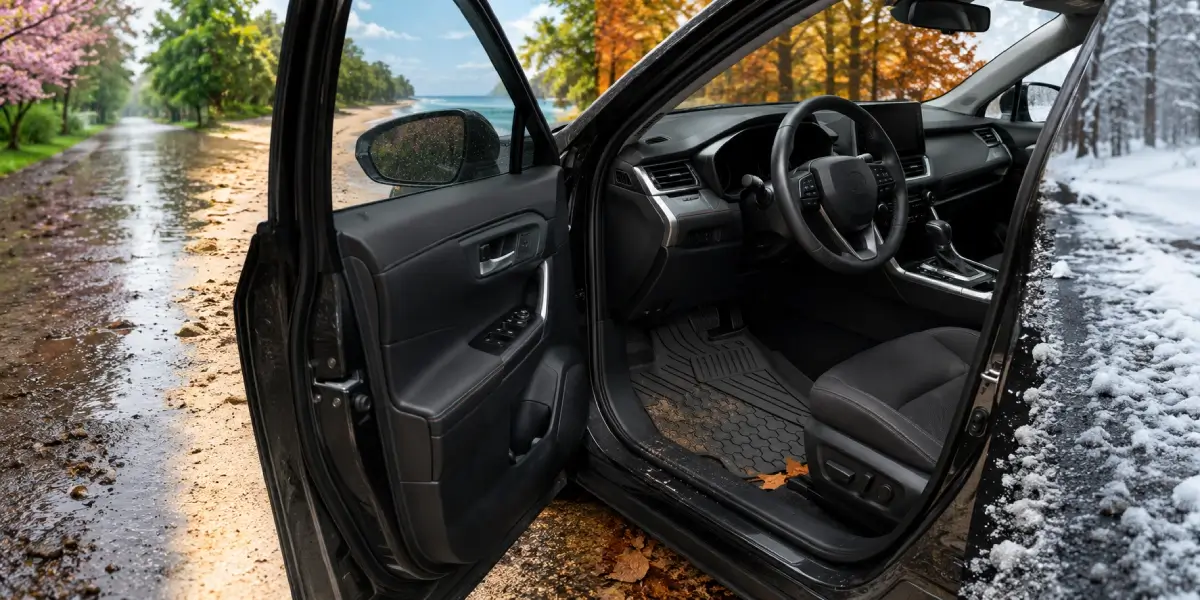
Winter is the obvious threat — slush, road salt, whatever comes off your boots in a grocery store parking lot. But the rest of the calendar isn't kind to a footwell either.

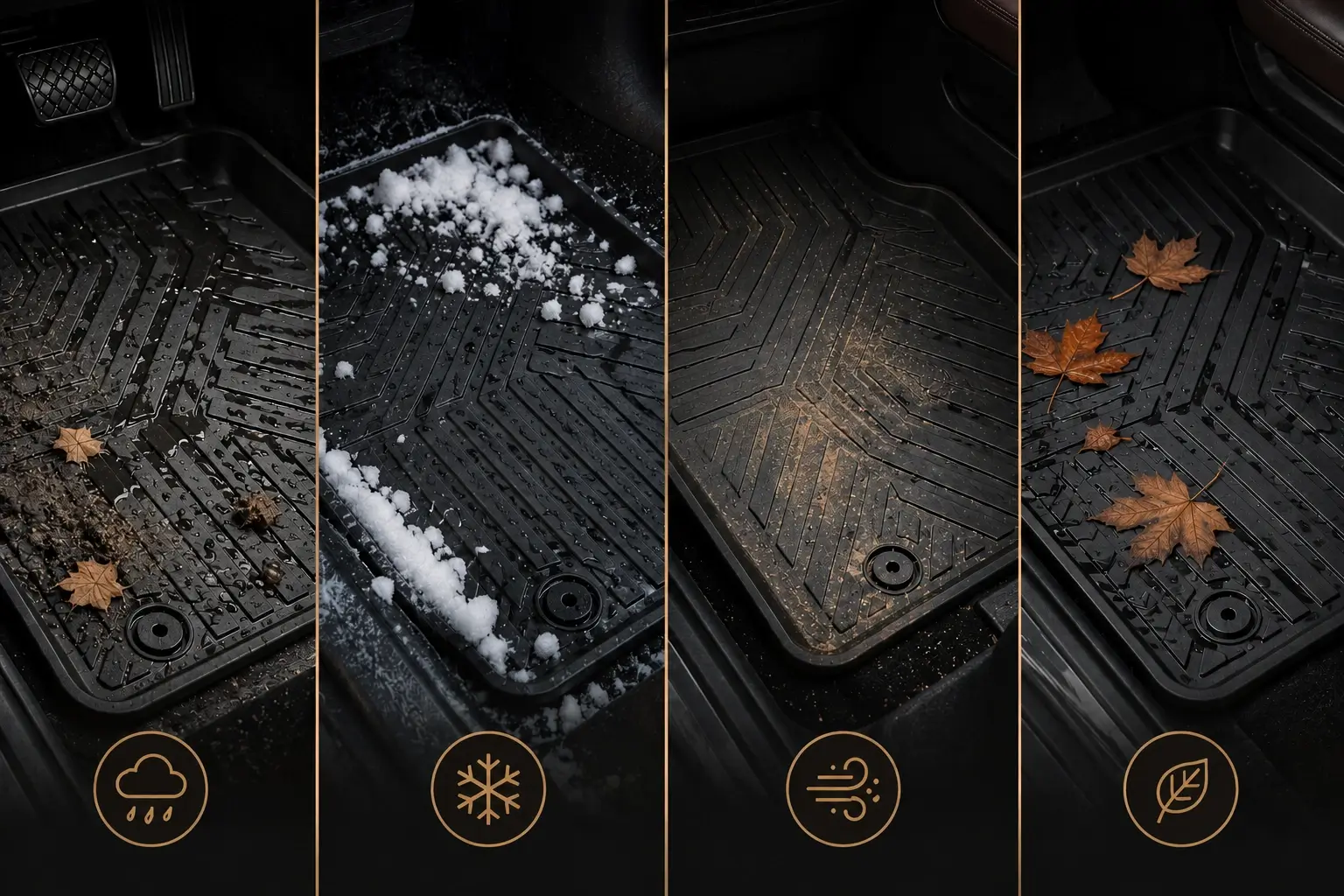
Spring brings mud. Summer brings beach sand, melted ice cream, spilled iced coffee and wet dogs. Fall brings rain and leaf debris. If your mats are only built for one quarter of the year, they're the wrong mats for the other three.

2. Carpet mats absorb. TPE doesn't.

This is the difference that matters most, and it's structural rather than a question of quality.

Carpet is porous. When liquid hits it, it soaks through the pile and into the backing. You can vacuum the surface and shampoo the top layer, but salt brine, coffee and melted slush have already gone somewhere you can't easily reach. That's where the smell comes from, and why it comes back.

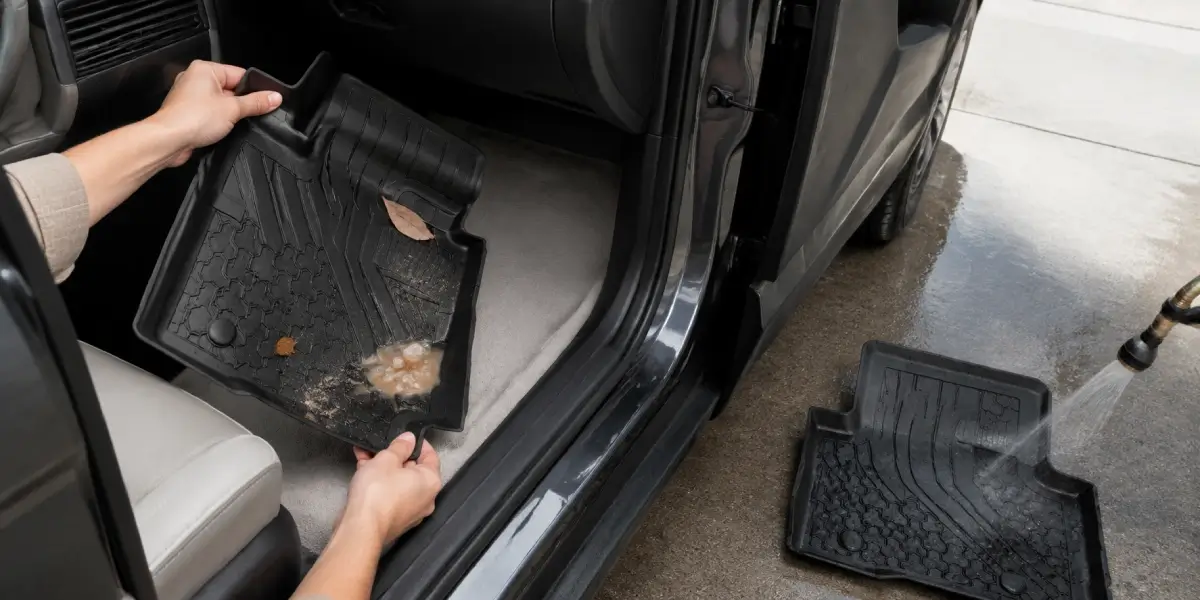
TPE is a non-porous barrier. Nothing soaks in, because there's nowhere for it to go. You pull the mat, hose it, dry it, put it back. Five minutes, and the mess is actually gone rather than relocated.

3. The carpet underneath is expensive

Your factory carpet is not a wear item. It isn't designed to be replaced, and replacing it means pulling seats and trim — which is why it rarely gets done and usually just gets lived with.

Salt leaves white staining that resists cleaning. Ground-in grit wears through the pile at the heel point. Both are visible, and both are among the first things a buyer or appraiser looks at when assessing an interior. A mat that fully contains what lands on it is doing preventive work on a surface you'd rather never think about.

4. One material that genuinely handles both extremes

"All-season" only means something if the material holds up at both ends of the year. Some mats stiffen and crack in deep cold; others go soft and tacky in a closed car in July.

CraftZen mats are moulded from TPE that holds its shape from -50°C to +80°C. That range covers a Prairie cold snap and a black interior parked in August sun, without expansion, cracking or warping. One set, no swap dates to remember, and no second set taking up space in the garage.

The practical upside

The two-set system also has a timing problem nobody solves well. The first snow always arrives before the mats get swapped, and spring slush lingers well after they come out. Those gaps are precisely when the damage happens.

A single moulded set removes the decision entirely. It's in the car in January and it's in the car in July, doing the same job in both.