Blog
3D Mats vs Rubber Mats: What’s the Difference?
If you've shopped for floor mats recently, you've seen both terms used as if they're opposites. They aren't — and understanding why makes the choice a lot easier.
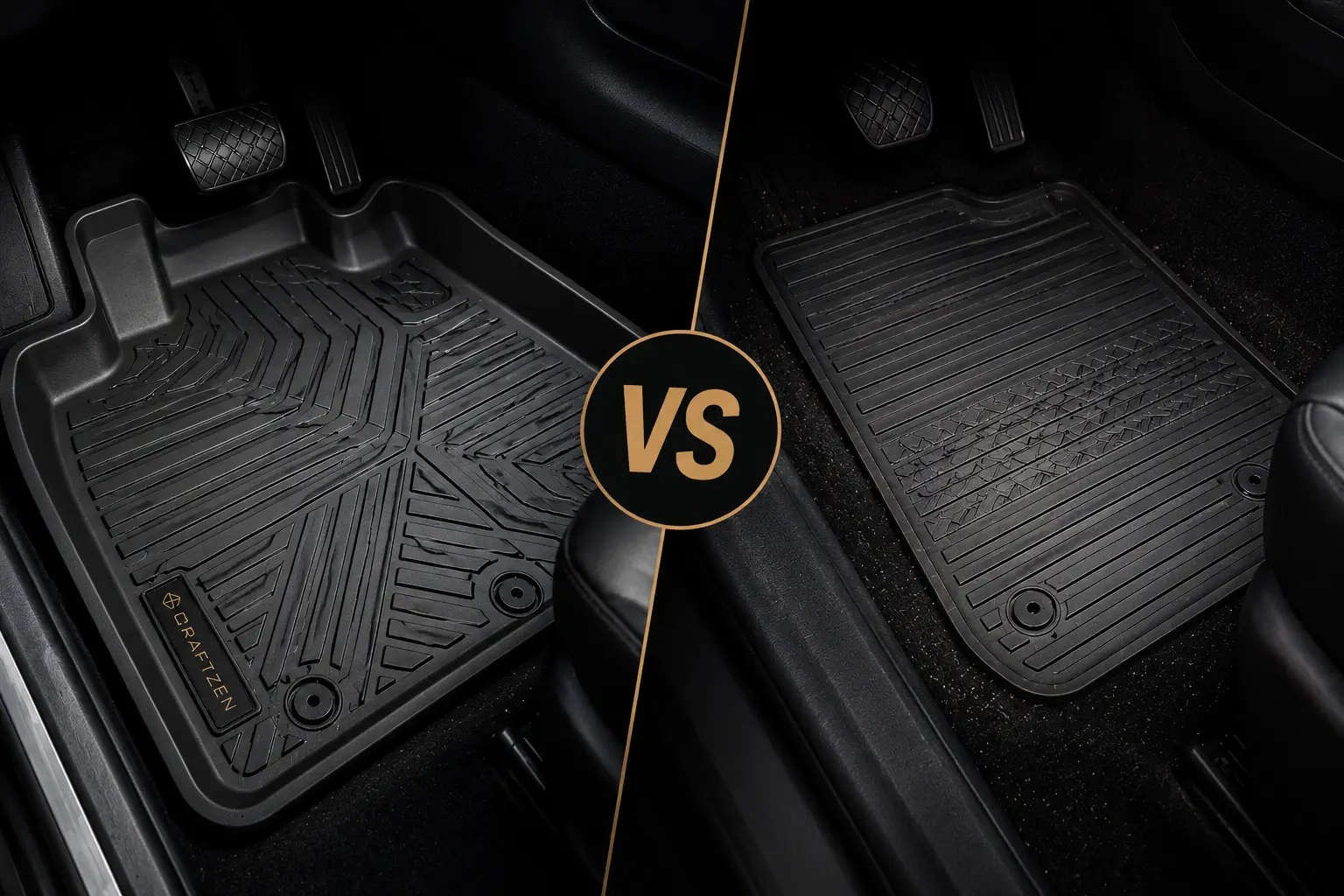
"Rubber" describes what a mat is made of. "3D" describes what shape it's in. You can buy a flat rubber mat, a moulded rubber mat, or a moulded TPE mat. So the real question isn't which label to pick. It's two separate questions: what shape do you need, and what material do you want it in?
The shape question
A traditional rubber mat is essentially a flat sheet with a shallow lip, sold in a few generic sizes and often meant to be trimmed with scissors to approximate your footwell.
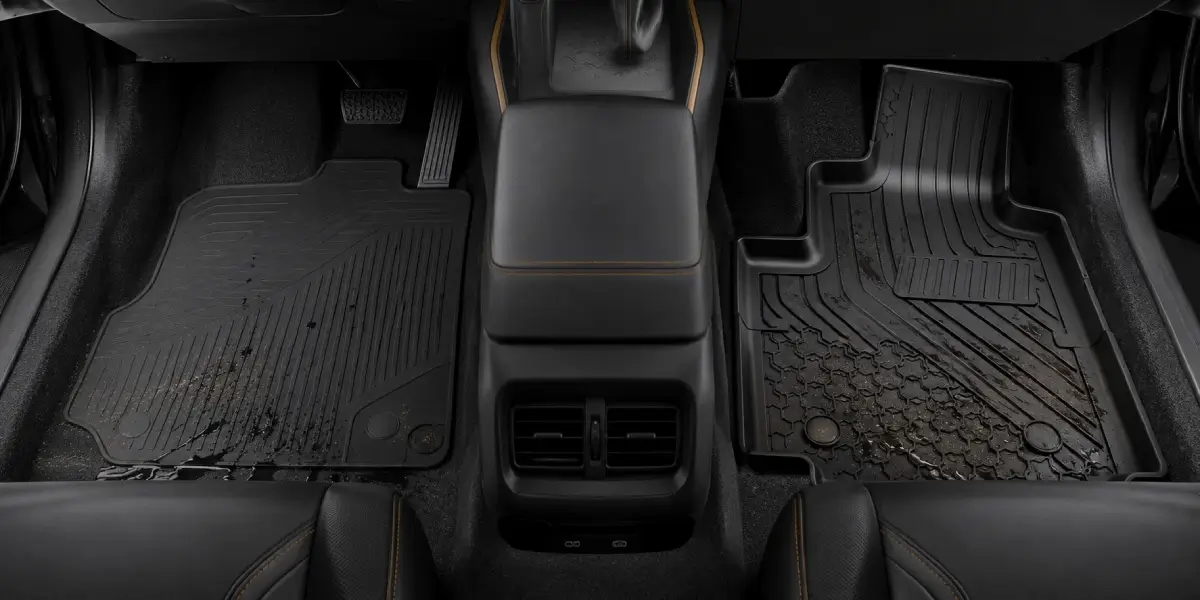
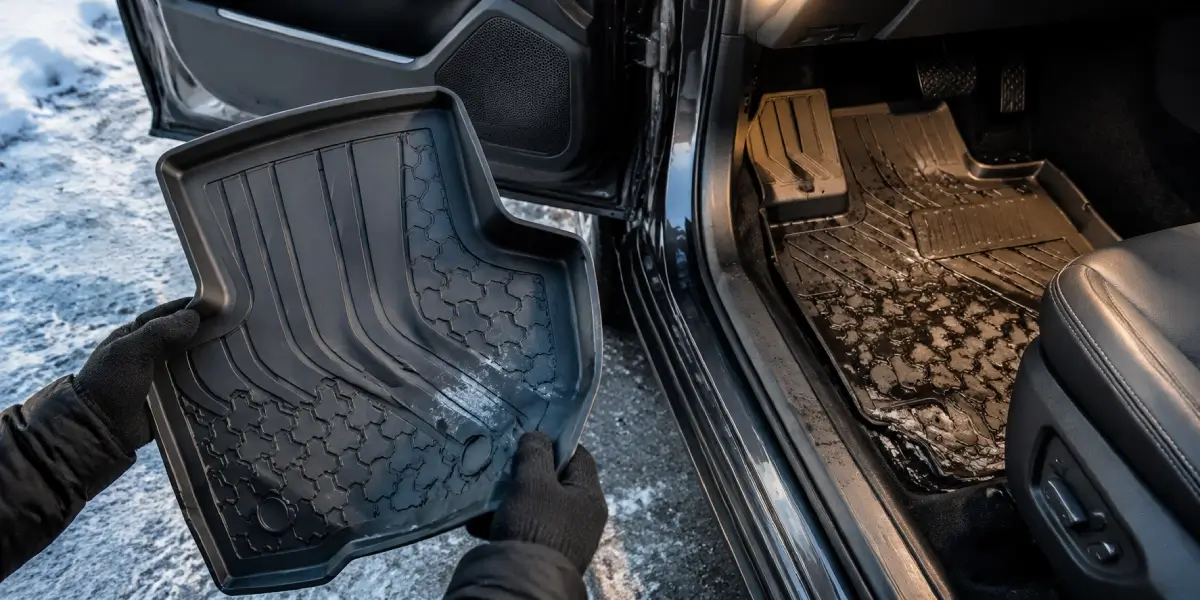
A 3D mat is moulded to the actual contours of one specific floor pan — up the transmission tunnel, into the corners, around the seat rails. Raised edges and channels run along the surface so water, slush and grit collect in the mat instead of running off the sides.
That difference shows up in three places:
- Coverage. A flat mat protects the middle of the footwell. A moulded mat protects the sloped and vertical surfaces around it, which is exactly where melting snow runs.
- Containment. High lip edges hold liquid. A flat mat with a 5 mm lip does not.
- Stability. A mat cut to fit approximately will move. A mat moulded to the floor pan and secured by the factory retention clips sits where it's supposed to sit — which matters most in the driver's footwell, where you don't want anything shifting near the pedals.

The material question
Traditional rubber is durable and inexpensive. The trade-offs are well known to anyone who's owned a set: it's heavy, it has a persistent smell, it can leave dark marks on light-coloured carpet and door sills, and it stiffens noticeably in deep cold.
TPE — thermoplastic elastomer, the material we use — is the newer alternative and the one most automakers have moved toward for interior components. It's odourless, lighter, doesn't transfer marks, and holds its shape from -50°C to +80°C, so a Canadian February doesn't turn it brittle. Because it's a thermoplastic rather than a vulcanized rubber, it can also be remelted and recycled at end of life, which vulcanized rubber cannot.
One caveat worth knowing: TPE is a family of materials, not a grade. A budget mat and a premium mat can both be honestly labelled TPE. What separates them is the manufacturing — mould accuracy, wall thickness consistency, and whether the compound contains recycled scrap filler.
What we do?
CraftZen mats are moulded TPE, and the specifics are where the difference lives:
- Each vehicle's floor pan is measured with a 3D laser scanner to 0.1 mm before a mould is cut
- Steel injection moulds produce consistent thickness across the first unit and the ten-thousandth
- A dual-sided moulding process finishes both faces, with an anti-slip texture on the underside
- No scrap or filler material in the compound
So which should you buy?
If you want the cheapest possible barrier between your boots and the carpet, a flat rubber mat does that job.
If you want the footwell actually covered — edges, corners, tunnel — and you'd rather not smell your mats or scrub black marks off your sills, a vehicle-specific moulded TPE mat is the better tool.
Just make sure it's moulded for *your* vehicle. A mat cut for a different model year, or trimmed by hand to fit, gives up most of what makes a 3D mat worth buying in the first place.